Spotlighting Indigenous Musicians
This spotlight series highlights influential Indigenous composers, singers and performers whose artistry and advocacy continue to shape Canada’s cultural landscape.


This spotlight series highlights influential Indigenous composers, singers and performers whose artistry and advocacy continue to shape Canada’s cultural landscape.
Truth and reconciliation is an ongoing process of acknowledging the lasting impacts of colonization, including the residential school system, and working toward meaningful relationships between Indigenous and non-Indigenous peoples. Through listening, learning, and taking action, Canadians can help advance the Calls to Action of the Truth and Reconciliation Commission and contribute to a more inclusive and equitable future.
Indigenous Peoples have faced generations of injustice and continue to experience barriers and inequities today. Recognizing this history is an important part of reconciliation, as is celebrating the strength, resilience, and ongoing contributions of Indigenous communities. Indigenous musicians have played a vital role in shaping Canada’s music and culture, and their voices continue to inspire audiences across the country and around the world.
We are proud to highlight and promote Indigenous artists whose music, stories, and contributions enrich Canada’s cultural landscape. We encourage you to explore and support the artists featured below, as well as the many other Indigenous creators who share their experiences, histories, and perspectives through their work.
Bandology is committed to supporting truth and reconciliation throughout the year. While National Indigenous History Month in June and the National Day for Truth and Reconciliation on September 30 provide important opportunities for reflection, learning, and action, these conversations extend far beyond specific dates on the calendar. Reconciliation requires an ongoing commitment to understanding the history and lasting impacts of colonization, including the residential school system, while recognizing and celebrating the strength, resilience and contributions of Indigenous Peoples and communities.
As an arts-based organization serving children and youth, we believe music can be a powerful tool for education, connection, and understanding. Indigenous artists have played a vital role in shaping Canada’s musical and cultural identity, and their stories continue to inspire audiences across the country. By highlighting Indigenous musicians and creators, we hope to encourage learning, foster respect and create opportunities for meaningful engagement with Indigenous perspectives and experiences.
Scroll down for links to organizations where you can learn more about truth and reconciliation and supporting Indigenous communities.
Paths to Reconciliation provides interactive maps, survivor stories, educational resources and learning tools that help Canadians better understand the history and ongoing impacts of the residential school system.
Orange Shirt Day honours Residential School Survivors, remembers the children who never returned home and raises awareness of the lasting impacts of the residential school system.
The IRSSS provides culturally grounded emotional and crisis support services to Residential School Survivors, their families and communities.
The REDress Project is an art installation created in 2010 by Métis artist Jaime Black that uses empty red dresses displayed in public spaces to honour Missing and Murdered Indigenous Women, Girls and Two-Spirit people.
The DWF works to build understanding and reconciliation between Indigenous and non-Indigenous peoples through education, awareness, and community engagement.
Meet some Indigenous artists who have helped shape Canada’s musical landscape through their creativity and advocacy.
Barbara Assiginaak is an Indigenous composer, musician and educator of Anishinaabe (Odawa, Ojibwe, and Potawatomi) descent from Mnidoo Mnising (Manitoulin Island) and a member of the Giniw (Golden Eagle) Dodem. She is recognized internationally for her contributions to contemporary classical music and for centring Indigenous worldviews within composition and performance. Assiginaak has created an extensive body of work including solo, chamber, choral, orchestral, electroacoustic and multimedia compositions, often incorporating Indigenous languages, themes and traditional instruments. Her music reflects a deep engagement with cultural identity, land and storytelling while expanding the possibilities of contemporary concert music. She is currently Assistant Professor and Coordinator of Composition at Wilfrid Laurier University’s Faculty of Music, where she helps shape the next generation of Canadian composers. Her teaching is grounded in Indigenous knowledge systems and a commitment to decolonizing music education.
Karen Sunabacka is a composer, musician and educator of Métis and Scottish descent with ancestral roots in Manitoba’s Red River Settlement. Her work is recognized for its exploration of cultural identity, family history and the complex dynamics of Indigenous–settler relations in Canada. She has created a diverse body of compositions ranging from solo and chamber works to choral and orchestral music, often drawing on personal and intergenerational stories connected to the prairies. She frequently collaborates with her mother, Joyce Clouston, an Indigenous Cultural Carrier, writer and social worker. In 2022, she released her debut album Curlicue, featuring her complete works for solo piano. Alongside her work as a composer, Sunabacka is committed to teaching and mentorship. She is Associate Professor of Music at Conrad Grebel University College, University of Waterloo, where she teaches composition and music theory. Her practice emphasizes storytelling, cultural intersection, and musical expression.
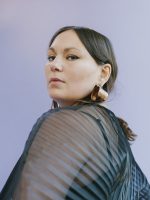
Tanya Tagaq is an Indigenous improvisational singer, composer, and author from Cambridge Bay, Nunavut. She is widely recognized in Canada and internationally for her artistry and for advocating social and political change related to Indigenous rights and environmental issues. Since rising to prominence in the early 2000s, Tagaq has received numerous honours, including two Juno Awards, the Polaris Music Prize, multiple nominations and the Order of Canada. Tagaq is best known for her powerful practice of Inuit throat singing, which she uses alongside experimental vocal techniques to push artistic boundaries. Her work often addresses systemic racism, the crisis of Missing and Murdered Indigenous Women and Girls and the importance of cultural preservation. Across her career, she has remained committed to artistic integrity and activism, achieving critical acclaim and widespread recognition.
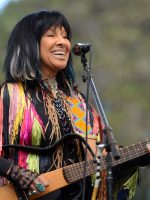
Buffy Sainte-Marie is an Indigenous singer-songwriter, composer, visual artist and social activist whose work addresses issues facing Indigenous peoples of the Americas. Born to Cree parents in Piapot, Saskatchewan, she was adopted and raised by a Mi’kmaq family in Massachusetts. She began performing in the 1960s in coffeehouses and folk festivals. By 1964, her songs “Cod’ine” and “Universal Soldier” brought her widespread attention and she was named Billboard’s Best New Artist. Over her career, she has received numerous honours, including an Academy Award for Best Original Song in 1983, five Juno Awards, induction into the Canadian Music Hall of Fame and appointment as an Officer of the Order of Canada. She also founded the Cradleboard Teaching Project in 1996 to support Indigenous education and cultural understanding through curriculum development.

Emma Pennell is an emerging Canadian operatic soprano, poet and librettist. A mixed settler artist with Mi’kmaw roots from Ktaqmkuk (Newfoundland), Emma was raised in the rural Northern Ontario village of South River and is quickly gaining recognition as one of Canada’s most compelling young voices. A member of the Canadian Opera Company’s Ensemble Studio, they earned second prize in the COC’s Ensemble Studio Centre Stage Competition and received the RBC Emerging Artist Award at the Governor General’s Performing Arts Awards. This season with the Canadian Opera Company, Emma covered several roles and appeared onstage as Kätchen in Werther. A graduate of the Glenn Gould School at the Royal Conservatory of Music, Emma also holds degrees from Western University and Cambrian College. Emma continues to create space for underrepresented artists through music, collaboration and storytelling.

Ian Cusson is a Canadian composer of opera, orchestral music, and art song, of Métis (Georgian Bay Métis Community) and French Canadian descent. His compositions often explore themes of identity, language and cultural connection. He studied composition with Jake Heggie in San Francisco and Samuel Dolin, and piano with James Anagnoson at the Glenn Gould School. Throughout his career, he has received numerous grants and awards, including support from the Canada Council for the Arts, Ontario Arts Council, Toronto Arts Council and the National Aboriginal Achievement Foundation. Cusson served as the inaugural Carrefour Composer-in-Residence with the National Arts Centre Orchestra from 2017 to 2019 and Composer-in-Residence at the Canadian Opera Company from 2019 to 2021. He is currently an Associate Composer of the Canadian Music Centre and a member of the Canadian League of Composers.
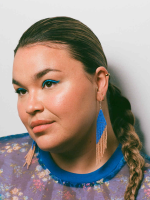
Elisabeth St-Gelais is a celebrated Canadian soprano dedicated to sharing and uplifting Indigenous culture through music. Her artistry has earned national recognition through numerous prestigious awards, including First Prize and the Audience Choice Award at the Canadian Opera Company’s Centre Stage Competition in 2023, as well as the Premier Prix d’Europe that same year. In 2022, she received the Wirth Vocal Prize from McGill University and the Grand Prize at the Concours de musique du Canada – Canimex. She was also named one of CBC’s 30 Under 30 and selected as Radio-Canada’s Classical Revelation Artist for 2023–2024 and in 2025 won the Washington District of the Metropolitan Opera Laffont Competition. She has performed with leading orchestras and companies across Canada and internationally. She actively collaborates with First Nations, Métis, and Inuit creators and serves as administrator of Jeunesses Musicales du Canada. Her debut EP INFINI (2024) has received critical acclaim.
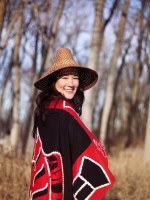
Mezzo-soprano Marion Newman is Kwagiulth and Stó:lō First Nations, with English, Irish, and Scottish heritage. Born in Bella Coola and raised in Sooke, British Columbia, she is recognized as one of Canada’s leading vocal artists for her powerful performances and commitment to Indigenous storytelling. Her repertoire spans Baroque masterpieces to contemporary Canadian opera, including acclaimed portrayals of Carmen and Rosina in The Barber of Seville. She received a Dora Award nomination for the world premiere of Shanawdithit with Tapestry Opera and has performed in Indigenous-centred works such as Missing and Migrations. Recent appearances include Mozart’s Requiem with the Canadian Opera Company and performances of works written for her by composers including Ian Cusson and Bramwell Tovey. She also continues developing Namwayut, an Indigenous-led cooperative opera, while championing Indigenous voices in classical music through performance, collaboration, and advocacy.

Susan Aglukark is an Inuk singer-songwriter whose music blends Inuit folk traditions with country and pop influences, making her one of Canada’s most celebrated Indigenous artists. Over a career spanning more than 25 years, she has released seven studio albums and earned numerous honours, including three Juno Awards, the Humanitarian Juno Award, the Governor General’s Performing Arts Award, and appointment as an Officer of the Order of Canada. Her breakthrough album This Child produced the hit single “O Siem,” making her the first Inuk artist to achieve a Top 40 hit in Canada. Beyond her music, Aglukark is a passionate advocate for Indigenous and Inuit youth, mental wellness, and food security in Northern Canada. Through her music and community work, she promotes messages of resilience, self-respect, healing, and hope that resonate with audiences across cultures. She currently resides in Halton.